Make it happen
Mexico city, Mexico » City Info
Mexico City, locally called as Ciudad de México is Mexico's capital city and one of the most important political, cultural, educational and financial centres in North America. With a GDP of $390 billion US dollars in 2008, it ranked as the eighth richest city in the world. Settling on an altitude of more than 2,000 metres, Mexico City is enamoured by glamour, cultural heritage and contemporary development. Every corner of the city is sprinkled with stories to tell of famous personalities and ancient tribes. The Aztecs discovered and gave the city its culture and heritage while the Spanish conquered it to reinvent the Latino city. Today, the amalgamation is mirrored in every landmark be it the Templo Mayor, El Zócalo square, Catedral Metropolitana or Frida Kahlo museum.
Top 10 Mexico City Landmarks
Zócalo:
El Zócalo (formally called the Plaza de la Constitución) is Mexico City's historic plaza where Spanish conqueror Hernan Cortes is said to have met Aztec emperor Moctezuma in 1519. After the conquest of Mexico, Cortes re-designed the Aztec capital, Tenochtitlán in conformity with Spanish traditions. It comprised of a square at the heart of the city, surrounded by stately colonial buildings, elaborate churches and elegant mansions. The square has long been the centre for festivities and events such as the Dia de la Bandera on February 24, Grito de la Independencia on September 15 & 16. During the Christmas season, the square lights up in a maze of colours. A walking tour of the historical centre can be arranged at anytime of the day.
Monumento a la Independencia (Independence Monument / Angel of Independence):
The Monumento a la Independencia officially called as Columna de la Independencia was built to commemorate the War of Independence centennial celebrations in 1910. The victory pillar is also referred to as the Angel of Independence due to the glimmering golden angel standing atop the 36-metre column. At night, when the monument is illuminated, it mirrors a spectacular effect over the neighbouring Paseo de la Reforma Avenue. In 1925, the memorial was transformed into a mausoleum, when the names of war heroes were etched at the base of the monument.
Templo Mayor:
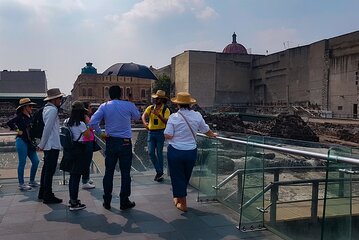
The ancient ruins of Templo Mayor located northeast of the Zócalo, provide an insight into the lifestyle of the Aztec Empire settled in Tenochtitlán city. It is Mexico City's one of the most important historic landmarks, designated by UNESCO as a part of World Heritage List in 1987. Dating back to more than 500 years, the wide expanse of the site was accidentally discovered by a telephone repairman in 1978. Since then, its excavation has reported thousands of stone carvings, jewellery and skulls of sacrificial victims from rival tribes. All this and more is displayed at the adjacent Museo del Templo Mayor.
Palacio Nacional (National Palace):
The Palacio Nacional (National Palace) located on Mexico City's main square El Zócal, has been the residential palace for Mexico's ruling community since the Aztec Empire. In fact, much of the construction material is derived from Moctezuma II palace or what is called "New Houses". Of particular interest are the colourful murals adorning the stairwell that depicts Mexico's history. Diego Rivera painted these scenes between 1929 and 1952.
Every Independence Day, on September 15th at midnight, the President rings a bell from the central balcony of the National Palace and gives the annual Grito de Dolores by shouting "Viva Mexico!"
Catedral Metropolitana (Metropolitan Cathedral):
The Metropolitan Cathedral is the oldest and largest in the Americas and the seat of the Roman Catholic Archdiocese of Mexico. In the late 16th century Hernan Cortes initiated the construction of a church on the Aztec ruins of the Templo Mayor to secure Spanish power. The present cathedral dedicated to the Assumption of Mary was built around the original church over sporadic intervals from 1573 to 1813. Spanish architect Claudio de Arciniega who was appointed to design the cathedral, took inspiration from the various cathedrals in cities such as Valladolid and Málaga.
Museo Frida Kahlo:
The Frida Kahlo museum (Museo Frida Kahlo) also known as Blue House because of its cobalt blue walls, is a historic museum dedicated to the life & work of Mexican artist Frida Kahlo. The Casa Azul (Blue House) was where Frida was born in 1907 and returned back in her retiring years. Four years after Frida's death in 1958, the house was converted into a museum. It prominently showcases Frida and her husband Diego Rivera's personal belongings like diaries, early sketches, outfits, photographs, memorabilia and other items. However, to see & enjoy Frida's paintings to a greater extent, visit other museums like the Dolores Olmedo Patiño Museum in Xochimilco, or the Modern Art Museum in Chapultepec Park.
Museo Dolores Olmedo Patino:
Art collector & Mexican businesswoman Dolores Olmedo left her house as a museum so that people could enjoy the works of her friend Diego Rivera, his wife Frida Kahlo and Angelina Beloff (Rivera's first wife). The museum features paintings and creations of all these three great artists, including the portrait of Olmedo herself. Kahlo's famous works like 'The Broken Column' depicting her spinal injury is also on display. In addition, the museum also exhibits collections of hacienda artefacts and folk-art.
Castillo de Chapultepec (Chapultepec Castle):
Castillo de Chapultepec is a castle located on the top of the Chapultepec Hill in Mexico City. The name Chapultepec is derived from the Náhuatl word chapoltepe-c which literally means "at the grasshopper's hill". The castle's site which was a sacred place for the Aztecs, has adorned various roles throughout the Mexican history. It has been home to the Military Academy, Imperial residence, and observatory and is presently the address for the Museo Nacional de Historia. It is the only Royal castle in American continent and North America to accommodate European sovereigns such as the Mexican Emperor Maximilian I and his Empresses Carlota.
Palacio de Bellas Artes (Palace of Fine Arts):
The Palacio de Bellas Artes (Palace of Fine Arts) is the most important cultural centre in Mexico and is located in the historic centre of Mexico City near the Alameda Central Park. The initial construction of the white structure began in the early 1900's but was renovated to a more extravagant one to commemorate with the Centennial of the Mexican War of Independence in 1910. The design and structure is a mix of Art Nouveau and Art Deco elements as the architects Adamo Boari & Federico Mariscal exchanged hands due to subsequent Mexican Revolution and political tension. Diego Rivera murals famously prettify the interiors of the building which is well-known for hosting many theatrical performances including the Ballet Folklorico de Mexico.
Torre Latinoamericana (Latin American Tower):
One of the highest buildings in Mexico City, the Torre Latinoamericana at 183 meters/597 feet is the city's most important landmark. Built in downtown Mexico City on an extremely seismic active land, the construction of the building is widely acknowledged as an engineering feat. The 45 floor skyscraper gives a breathtaking view of Mexico City from its observation deck with telescopes. As you climb down, the building features innumerable offices, eateries, bars and even an aquarium.
Top 5 Bars
Condesa DF:
Condesa DF primarily appeals to crowds who prefer to stay away from the maddening rush of Mexico City. This upscale bar located in a hotel by the same name, is one of the best places to enjoy a drink and hors d'oeuvre. If you are lucky enough, you may come across a Hollywood celebrity slurping on a Cucumber Mescal Mojito or top-class tequila. Cut your way to the terrace bar in the treetops where you can select from a range of delectable sushi's and knock-out cocktails.
Rexo:
The Rexo was one of the early bars in Mexico City that redefined nightlife in the city. Distinctively styled in black and white interiors, Rexo still rules the roost with a twin-level bar and an appetizing menu. You will find many rich 30-plus club-goers frequent the place for a glass of tantalizing martini.
Barracuda:
Named after the fearsome fish, Barracuda is brimming with the younger crowds who are game for a couple of shots or a variety of martinis like the Mai Tai. The elegant restaurant/bar is also a great place to gorge on some U.S. styled burgers and malt shakes.
AREA Bar and Terrace, at the Habita:
The rooftop bar of the contempo Polenco hotel in Mexico City, the Area Bar and Terrace instantly swings into action with an all-white, minimalist interiors. Contrary to the traditional, stereotypical bars, Area comes with a futuristic feel of open-air rooftop terrace looking over the high rises of the city. The glitzy 20-somethings, execs, and hi-profile couples frequent this place for some amazing cocktails and exquisite drinks.
Rioma:
If you get past the VIP doorman security at Rioma, then this is one of the best bars/clubs in Mexico City. Frequented by celebrities, the scene inside Rioma is invigorating with Euro-pop, house, and techno music challenging the movers & shakers. On the weekends, the crowd dots the street to get indoors, so it is better if you pre-book a nightlife package from your hotel.
Top 10 Activities
Teotihuacan Pyramids and Shrine of Guadalupe:
The Teotihuacan Pyramids are a wonderful example of ancient Aztec empire ruling the Latin American zone. Teotihuacan, which once rose to the ranks of the 'City of the Gods' is now an archaeological site brimming with historical treasures. Visit famous Aztec sights of Butterflies Temple, the Avenue of the Dead and the Temple of Quetzalcoatl and don't forget to climb the Pyramids of the Sun and Moon! Complete the tour with a visit to the nearby Shrine of our Lady of Guadalupe, a 16th century shrine built in Spanish Baroque Art.
Mexico City Sightseeing Tour:
Capture the heart of Mexico City by booking a half or full day guided city sightseeing tour. Immerse in Mexico's rich traditions and history extending vast beyond the known, by visiting sights like Chapultepec Park, the Anthropology Museum, Metropolitan Cathedral and the National Palace. This tour will summarize Mexico's centuries of history from the Aztecs to the Spanish conquerors until the modern times.
Mexico City Folkloric Ballet:
A viewing of Mexico's traditional folkloric ballet is a must do on your itinerary if you really want to unleash the cultural roots of this Latin American country. Hummable songs and dancers in bright, fabulous clothes fill the background at the various theatre venues. The energy of the show catches on quickly as it provides entertainment second to none.
Dolphin Encounter at Six Flags:
Playing with dolphins is every kid's dream. But no matter what your age, these cute aquatic animals always give you a fun-filled experience with all their love and affection. Play, swim, interact and be one of them. Learn their antics and way of communication. Make a friend of a lifetime at the Dolphin Encounter, Six Flags.
Puebla and Cholula Day Trip Tour:
One of the biggest archaeological excavations to take place in Mexico is at Cholula, the city with seven pyramids, some of which are taller than the ones in Egypt. The Cholula archaeological zone is also characterized by innumerable catholic churches built by the Spaniards over pre-Colombian monuments. Famous among them is the Santa Maria de Tonazintla Church made of baroque indigene style with interiors of gold. A little further away is the city of Puebla - "The City of Angels", a UNESCO World Heritage site renowned for its imposing Cathedral at the Main Square. Discover other majestic landmarks such as the Chapel of the Rosary, the Convent of Santa Monica and the Onyx and Talavera ceramic factories.
Segway Tour in Mexico City:
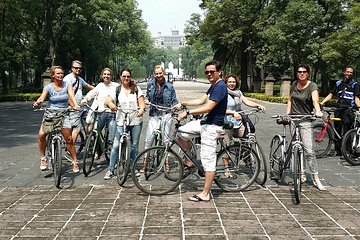
The Segway portable, self-balancing transporters are now in Mexico City, on which you can zip through the city in a matter of few minutes. Hop on this modern and fun Segway scooter to discover old streets, historical buildings, amazing parks and unknown crooks & corners. A guided tour will take you past Mexico City's main cultural and historic attractions depending on the route you choose. Try this as an option to the regular bus or walking tours.
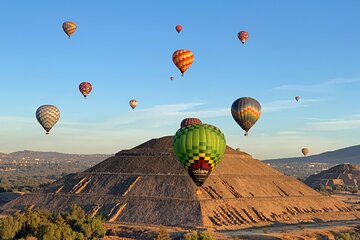
Teotihuacan Pyramids Hot-Air Balloon Tour:
View the Teotihuacan Pyramids from a birds eye view with an amazing hot air balloon flight over all the pyramids. Capture picturesque aerial shots of the Pyramids of the Sun and the Moon, virtually impossible to click at ground level. Be an eyewitness to the ancient Mayan heritage as you sail above the clouds in a hot air balloon.
Cuernavaca and Taxco City Tour:
The Cuernavaca and Taxco City Tour covers Cuernavaca 'The City of Eternal Spring' admired for its year-round warm climate. The full guided tour from Mexico City stops at one of oldest Cathedrals in the American continent before proceeding further to the city of Taxco. Called the "Silver Capital of the World", a visit to Taxco involves shopping for some beautiful, Mexican silver ornaments, appreciating colonial architecture and visiting the famous parish church of Santa Prisca constructed in impressive Churrigueresque art style. Encounter and admire the silver work of skilled craftsmen on a walk down the cobbled streets of Taxco.
Xochimilco Aztec Canals and National University of Mexico:
Gain knowledge on World Heritage Site of the pre-Hispanic Xochimilco best known for its canals and artificial islands called Chinampas. Ride in the beautiful flat bottomed gondolas through the grand floating gardens which are the remnants of an ancient lake that fed the Aztecs. Visit the 1550 founded National University, Latin American's largest campus complete with an Olympic stadium, Central Library and murals by Juan O'Gorman.
Garibaldi at Night:
This short Mexico City tour shows splendid night visuals and the wonderful atmosphere influencing the city. Admire illuminated monuments at the Zocalo Square; move on the meeting place of the Mariachis - Plaza Garibaldi and wind up the night with a traditional Mexican show that will give you a real experience of classic folklore and ballet.
Top Mexico City FAQs
Q.1) Where is Mexico City located?
Ans: Mexico City, the capital of Mexico, is located in the Valley of Mexico in the Trans-Mexican Volcanic Belt in the high plateaus of south-central Mexico.
Q.2) What is the official language spoken in Mexico?
Ans: The official language spoken in Mexico is Spanish.
Q.3) When is the best time to visit Mexico City?
Ans: Mexico City is located at a higher altitude in contrast to other cities in Mexico where the weather greatly differs from one destination to another. Since, Mexico City enjoys a temperate climate throughout the year, it rarely gets hot and you may need to carry a sweater or two even in summer. The best time to visit is from April to September when the days are warm and evenings are chilly and wet. The cold season from November to February is not the apt time to visit since air pollutants get trapped due to severe thermal inversion, causing respiratory problems.
Q.4) How safe is Mexico City for tourists?
Ans: As with any other large metropolis, Mexico City suffers from serious problems of crime and violence. However, the city is safe for tourists if certain precautions are taken to avoid any untowardly incidence. To avoid robberies, be alert at airports, stations, crowded peseros, metro and buses. Keep your belongings close to you. Avoid carrying ATM cards, credit cards or large amount of cash. Most importantly, if you get mugged don't resist but rather give away whatever valuables you have.
Q.5) What are the Emergency Numbers in Mexico City?
Ans: Here is a list of emergency numbers in Mexico City. When dialling from U.S. or Canada dial 011 52 55 followed by the number shown below. When dialling anywhere from Mexico, dial 01 55 followed by the number shown below. If dialling locally, call the number below.
- Police: 060 and 080 (Fire, Emergency, Traffic, etc)
- Crime Reporting: 061
- Fire Department: 5768-8261
- Ambulance: 5557-5757 (Red Cross)
- Federal Highway Police: 5684-2142
Q.6) What are the Important Phrases in Spanish while conversing with locals?
Ans: Important phrases that may be helpful while in Mexico City. Although, people from the hospitability industry speak English, a little effort to speak Spanish might help building a rapport with the Mexicans.
- Hello / Hi - Hola
- See you later - Hasta Luego
- Good Morning, Good Day - Buenos días
- Good Afternoon - Buenos tardes
- Good Evening, Good Night - Buenos noches
- Good Bye - Adiós
- Yes - Sí
- No - No
- Please - Por Favor
- Thank You - Gracias
- You are welcome - De Nada
Q.7) What is the electric current voltage in Mexico?
Ans: Electric current voltage throughout Mexico is 127 V, 60Hz the same used in U.S. and Canada. However, if you are carrying electrical appliances with a three point electrical cord, take a converter along.
Q.8) What are the Visa Requirements for Mexico City?
Ans: U.S. citizens require a visa or tourist card only if their stay extends for more than 72 hours beyond the "border zone". Citizens from other countries, please check our exclusive Visa Requirements page.
Q.9) What is the Time Zone of Mexico?
Ans: The standard time zone of Mexico is UTC/GMT -6 hours CST and no daylight saving time is observed.
Q.10) How do I find the best deals on hotel bookings, air fares and car rentals?
Ans: Surf mexicocity.com to get the best deals on flights, hotel, cruise and car rental bookings. With mexicocity.com, you are guaranteed the best trip of your life at a fantastic price.
Q.11) What are the contact numbers of pharmacies in Mexico City?
Ans: Here is a list of pharmacies in Mexico City. When dialling from U.S. or Canada dial 011 52 55 followed by the number shown below. When dialling anywhere from Mexico, dial 01 55 followed by the number shown below. If dialling locally, call the number below.
- Farmacia Central: 5522-6422
- Farmacia Clinica Londres: 5229-8400
- Farmacia Express: 5356-1156
- Farmacia París: 5709-5349
- Farmacia San Isidro: 5578-1825
Q.12) What is tipping etiquette in Mexico City?
Ans: Tipping is very important in Mexico City since employees get very little salary and tipping forms a major chunk of their income. Here's is the tipping suggested for different types of jobs:
- Grocery Stores: 1 to 5 pesos for bagging clerks
- Restaurant: 15% of the bill before VAT is added
- Bar: $1-2 per drink or 15-20% of the total bill
- Baggage Handlers/Bell Boys: $1-2 US per bag
- Housekeepers: $2-5 US or 20 - 60 pesos per person, per housekeeping visit
Q.13) Is drug violence is affecting tourism in Mexico City?
Ans: Escalating drug violence has scared off tourists in recent times, but past experiences have proved that Mexico City has weathered the storm of drug-related crime bravely.
Getting Around in Mexico City
For a city of enormous proportions, getting around in Mexico City is comparatively straightforward. There are plentiful of choices to the entire tourist destinations scattered throughout the city.
Speedy subway metro system covers most part of the city with regular service round the clock. Moreover, bus system in the city is also fairly efficient with peseros, electric buses, and regular buses carrying people to and fro various points. In 2006, a dedicated lane was built for the metro bus, which operates from North to South along the longest commercial boulevard in the world, Avenida Insurgentes.
Hailing or pre-booking taxis is also a popular choice of transportation since they are in abundance and are reasonably priced.
If you plan to drive yourself around the city, then be prepared for pollution, congestion and disrespect for traffic rules. Pedestrians and cyclists cross the road on a whim and one ways & red signals are not observed most of the times. Also, beware of driving out at night as drunken driving is common during weekends.
Bus System
RTP
Government operated RTP full-sized buses that travel within the city on chosen routes are reasonably cheap. RTP buses travel and stop on the same route as peseros but are a safer option since they drive more carefully and are less accident prone. As in every large metropolis, they tend to be packed during rush hours with people dangling off the doors. Be sure to pay attention to your stop and shout Bajan! loudly when it arrives, since it is possible that the bus won't stop or will for very little time.Metrobus
Mexico City's Metrobus is one of the most successful projects in the country's transportation history. The Metrobus, a Bus Rapid Transit system is single-handedly responsible for the plummeting carbon emissions in the city thanks to most people opting for this speedier transit than going for a car or other modes of public transportation. Operating on the world's longest and most important streets, Avenida Insurgentes, Metrobus serves 12 miles with 36 stations and two terminals. Some of the world's top locations like World Trade Center complex, a university campus and innumerable commercial districts are to be found at the Avenida de los Insurgentes Boulevard.Turibus
Turibus is a tourist bus covering the most beautiful areas of Mexico City. This hop-on, hop-off bus can be boarded at any pre-designated stop and tickets are handed over to the passenger once they get aboard. Each passenger receives a personal audio guide of the various attractions in several languages. Tourists can stay back at a specific attraction and then board the Turibus a few hours later. This open top bus covers 21 historical and contemporary attractions of Mexico City.Colectivo (Pesero or microbuses)
Mexico City's peseros are grey-green coloured microbuses or combis operated by private firms. Since they are cheaper than regular taxis and follow routes that most other buses are not able to ply, peseros are a popular mode of transport. These routes generally start and end at metro stations but stop at nearly every street corner. Night fares between 11:00 am to 6:00 pm are 20% expensive than day fares. Travelling on a pesero is not advised due to rash driving and frequent accident episodes cropping up every now and then.Electric Trolley Bus
The Transportes Eléctricos Del Distrito Federal operated Electric Trolley Buses in Mexico City is one of the largest systems in North America. There are about 15 trolley buses operating on the roads of Mexico City spanning more than 400 kilometers. Compared to regular buses, electric trolley buses are not crowded as they travel at a comfortable speed due to the overhead cables. The fares are charged at a flat rate irrespective of the destination.Taxis
The cheapest mode of public transportation in Mexico City is taxi travel. In addition to providing comfort of a private car, taxi fares in Mexico City are 90% cheaper compared to economically developed countries. Public taxis like yellow or green Beetle taxis or Tsuru libre taxis are very cheap, but they should be avoided for safety reasons. Sitio or turismo luxury taxis attached to hotels are the safest considering the sharp increase in 'express kidnap' incidents in the city.Metro
The Mexico City metro system which is the second largest metro system in North America, serves 1.4 billion passengers in the metropolitan area of Mexico City. Travelling along 11 different lines, the metro trains are most of the times filled beyond capacity. However, they are a better alternative to taxis especially during rush hours when the streets are clogged with traffic. Also, trains run every couple of minutes so even if you miss a train; the next one is on its way. Operating times are from 5:00 am to midnight on weekdays (starts at 6:00 am on Saturday and 7:00 am on Sunday). More information on train schedule, lines and stations is available on http://www.metro.df.gob.mx/The Metro offers free service to the elderly, the physically impaired and children less than 5 years (attended by an adult). Since the trains have signs in Spanish, here are few commonly used words translated in English.
- Taquilla - Ticket booth
- Entrada - Entrance
- Salida - Exit
- No Pase - Do not enter
- Andenes - Train platforms
- Correspondencia - Line transfer
- Dirección - Direction you are heading inside a line: one of the two terminal stations
Light Rail (Tren Ligero)
The Mexico City Light Rail is a LRT public transportation system that serves southern Mexico. Though it is well connected to the Mexico City Metro, it is operated by a separate agency Transportes Eléctricos del Distrito Federal that is also responsible for the electric trolleybus system. The 18 station, 26 km light rail line runs between Metro Tasqueña and the town of Xochimilco, south of Mexico City. Along the way it stops at Las Torres, Ciudad Jardín, La Virgen, Xotepingo, Nezahualpilli, Registro Federal, Textitlán, El Vergel, Estadio Azteca, Huipulco, Xomali, Periférico, Tepepan, La Noria, Huichapan and Francisco Goitia stations.Car Rental
Renting a Car in Mexico City is an excellent idea if you plan to travel to the surrounding areas such as Pueblo. Try to rent a car that is manual shift without air conditioning since the price for air conditioned cars is exorbitant. Try to hire a chauffeur driven car rather than driving the car yourself. There are a variety of local and international car rental agencies and their fees and conditions vary from agency to agency. Beware of the additional surcharges levied on the rental charges such as VAT which may differ in the holiday season, airport rental fees, gas charges and late fees. In addition, weekend rates are higher than other days of the week. If you are going to drive the car, it is required that you are 25+ years old and have a valid driver's license. Before renting a car inspect the vehicle thoroughly for scratches, dents and damages. Once you rent a car, enjoy the freedom and flexibility it offers by travelling the off beaten tracks and countryside of Mexico.Walking
Walking in Mexico City may not always be a pleasure trip since the attractions are spread far off from each other. Although, the metropolis has sidewalks and foot-bridges designated for walking, they may not necessarily be in a good condition or ideal for the purpose. The irregular and undisciplined traffic asks for alert pedestrians especially at crossings. However, in colonial cities, walking to explore the sights is the best option. The cobbled roads down the historic centre make for best viewing angles of local attractions.Communication in Mexico City
Telephone
Telemex has a near dominant monopoly on the telephone lines in Mexico City with 90% of the lines managed by the Mexican company. Due to this monopoly, telephone charges, high-speed internet rental (ADSL) and long distance calls are still comparatively high compared to USA and Canada.
If you want to make a call to Mexico City number, the country code is +52, followed by the area code 55 and then the 8 digit telephone number. For calling out of Mexico, dial 00 followed by the country code (example 00 1 for USA), the area code and then the telephone number.
Hotels provide in-room telephones to make local, national and international phone calls. Other than local calls, which are mostly free, making national and international calls are not so expensive. However, preferably use a calling card to make long-distance calls as it will cost you less than calling from hotel.
Use Telemex prepaid phone cards at public phone booths which available in denominations of 30, 50 and 100 pesos. They are available at tobacco shops, kiosks and grocery stores as "Tarjetas Ladatel". Alternatively, you can buy an "alternative carrier" phone card that will save a significant amount of money on long-distance and international calls. Ask for a "Tarjeta para llamadas de larga distancia de descuento" at kiosks near bus and train stations, airports, etc.
Cellular Phones
Mexico City has an extensive coverage of cellular phones with Telemex owned Telcel, IUSACell and Telefonica owned Movistar being the main operators. In comparison to landline telephones, cell phone charges are very expensive especially when it comes to "roaming charges".
To call a cell phone from a landline or another cell phone, dial 044 prefix followed by the ten digit cell number comprising of area code. Example, to dial a cell phone number registered in Mexico City, dial 044 55 12345678 and for cities with three digit area codes such as Acapulco it will be 045 744 12345678.
One can also buy a prepaid phone kit which includes more free air time than the actual price of the kit. Amigo Kit from Telcel, Movistar Prepago from Movistar and Viva Kit from IUSACell are example of such kits. These can be purchased at any of the OXXO convenience stores, supermarkets, or mobile phone dealers.