Día de Muertos in Mexico City 2026: Alebrijes, Catrinas and Parade Dates, Day by Day
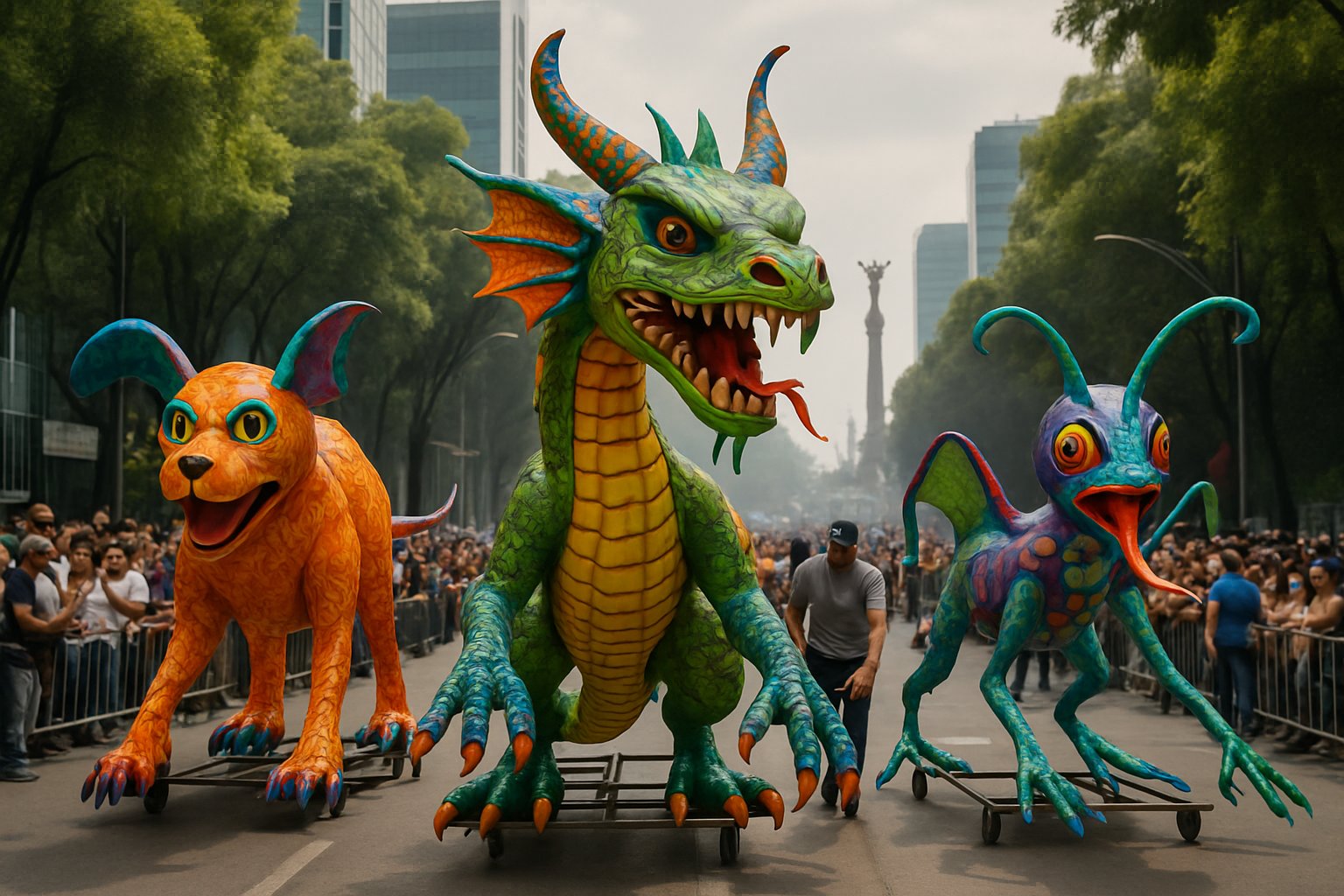
Giant alebrijes on 17 October, thousands of catrinas at dusk on 25 October and the grand parade on 31 October. Here is the CDMX calendar, the routes along Reforma and how to get a good spot.
The 2026 calendar at a glance
In Mexico City, the Day of the Dead season starts weeks before 1 and 2 November. For most of October, Paseo de la Reforma works as an open-air stage for the city's big parades. Here are the CDMX dates, in order.
- Sat 17 Oct: Monumental Alebrijes Parade, from the Zócalo to the Ángel de la Independencia
- 17 Oct–Sun 8 Nov: the alebrijes stay on display along Reforma
- Sat 24 Oct, 19:00–23:00: Día de Muertos night bike ride
- Sun 25 Oct, 18:00: Mega Procesión de las Catrinas, from the Ángel to the Zócalo
- Sat 31 Oct: Gran Desfile de Día de Muertos, from Chapultepec to the Zócalo
- Sun 1–Mon 2 Nov: Día de Muertos itself
Saturday 17 October: Monumental Alebrijes Parade
This is the 18th edition of the parade, organised by the Museo de Arte Popular (MAP). Alebrijes are fantastical creatures painted in vivid colours: winged jaguars, dragon-fish, animals that don't exist. The parade versions are built at a monumental scale by artists and collectives competing for prizes.
The parade leaves the Zócalo; check the Museo de Arte Popular for the confirmed start time. It runs along Avenida 5 de Mayo and Avenida Juárez, then along Paseo de la Reforma to the Ángel de la Independencia. It is free to watch.
Where to stand
- Near the start: Avenida 5 de Mayo, just off the Zócalo, lets you see the figures in their first stretch. The street is narrow, so you're close to the floats, but space fills fast. Arrive early, well before the start.
- On Avenida Juárez: the stretch beside the Alameda Central has more room to spread out, and you can retreat into the park's shade.
- On Reforma near the Ángel: this is the finish, with the widest sidewalks. It's a good choice if you'd rather see the parade a little later and walk among the figures as they settle into place.
The figures move slowly and the crowds are thick. Bring water, sun protection and a hat, because midday October sun on Reforma is strong.
17 October to 8 November: the alebrijes on Reforma
After the parade, the alebrijes go on display on the north and south sidewalks of Reforma, between the Ángel de la Independencia and the Estela de Luz. They stay there until Sunday 8 November (reported to close at 20:00).
If parade crowds aren't for you, this is the relaxed way to see them. You can stop at each figure, read the artist's description and take photos without the crush. Weekday mornings are the calmest time. Walking the full stretch at an easy pace, with stops, takes roughly an hour.
Saturday 24 October: night bike ride
The city's Muévete en Bici programme holds a Día de Muertos night ride from 19:00 to 23:00, along Reforma to the Centro Histórico. Many riders come in costume or face paint.
Sunday 25 October: Mega Procesión de las Catrinas
The 13th Mega Procesión de las Catrinas sets off at 18:00 from the Ángel de la Independencia. It heads along Reforma, Avenida Juárez and 5 de Mayo to the Zócalo, finishing in front of Palacio Nacional at around 20:30.
This is a walking procession rather than a float parade. Thousands of people take part dressed as La Catrina, the elegant skeleton who has become the face of the season. They march in themed contingents, including pre-Hispanic and folkloric catrinas, cyclists, pet-friendly groups and LGBT+ groups.
Watching is free. Registration for contingents was reported to close on 5 October, so if you haven't signed up, plan to watch from the route.
Getting there and where to stand
The nearest Metro stations to the Ángel are Insurgentes and Sevilla on Line 1. Either is about a 10-minute walk along Reforma.
The start is the best place to see costumes up close while everyone is still fresh and posing for photos, and the light is good as the sun goes down. If you'd rather see the procession arrive under the lights of the Centro Histórico, head to the Zócalo and aim to be in place well before 20:30.
Saturday 31 October: Gran Desfile de Día de Muertos
The city's grand parade is in its 10th edition, and it is the largest event of the season.
The date and start time
Some guides list the parade for 1 or 2 November. The Mexican reports we checked, published in August and September 2026, give Saturday 31 October.
The start time is not confirmed. Most reports give 14:00, at least one says 12:00 and others say it is still pending, so plan to be on Reforma by late morning either way.
The route and where to stand
The parade starts at the Puerta de los Leones, the lion-guarded entrance to the Bosque de Chapultepec. It runs the length of Paseo de la Reforma and finishes in the Zócalo.
- The Chapultepec end is usually less packed than the Centro, and the park gives you shade, toilets and food stalls nearby.
- Mid-Reforma, around the Ángel (Metro Insurgentes or Sevilla), has wide sidewalks, but they fill early. Arrive at least two hours ahead for a front-row spot.
- The Zócalo is the most atmospheric place to see the finale. It is also the most crowded.
On parade day, keep your phone and wallet in a front pocket, agree on a meeting point with your group, and expect Metro stations near the route to be extremely busy.
1 and 2 November: the days themselves and the Zócalo ofrendas
Día de Muertos proper falls on Sunday 1 and Monday 2 November. Families honour the dead with ofrendas (home altars), visits to cemeteries and shared meals.
The Zócalo is the end point of both the Catrinas procession and the grand parade, and it is the city's natural gathering place for the season. At the time of writing, the 2026 theme, dates and opening hours for the Zócalo ofrendas haven't been published. Watch the city's official Día de Muertos page for the announcement.
Before you go
Parade start times, routes and display dates can still shift as organisers finalise plans. This applies especially to the start time of the 31 October grand parade. Check before you go with the official CDMX tourism site and the organisers' own channels: the Museo de Arte Popular for the alebrijes, and the Mega Procesión's official channels for the catrinas.
Leave a Reply